 Nearly every electronic device you have touched today was built using SMT. The phone in your pocket, the controls on a machine, the board inside a medical device. Yet most people who specify a board could not say what separates a good SMT line from an average one.
That gap matters. The way a board is assembled stays invisible right up until something fails in the field. By then it is expensive to fix and hard to trace.
This guide closes that gap. By the end you will understand what SMT assembly is, how it differs from the older through-hole method, what actually happens to a board on the production line, and how to judge whether a manufacturer can do the job well. No heavy jargon, no assumptions about what you already know.
If you are choosing a contract manufacturer, or you simply want to understand how your product gets built, this is the place to start.
What SMT Assembly Actually Means
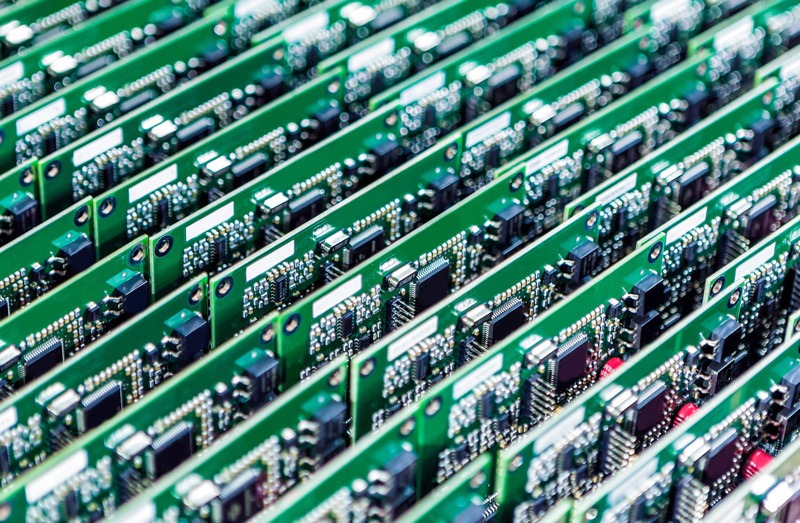
SMT stands for Surface Mount Technology. It is a way of building electronic circuits where the components are placed and soldered straight onto the surface of a printed circuit board (PCB). There are no drilled holes for the component legs to pass through.
It helps to clear up two terms that get mixed up. SMT is the process. An SMD, or surface-mount device, is a component designed to be fitted that way. So you use SMT to place SMDs onto a board.
This is now the standard approach. Over 90% of PCB assemblies today use surface-mount components. When people talk about SMT in electronics, they are describing the method behind almost everything modern and compact.
The appeal is simple. Surface mounting lets manufacturers fit far more components into a smaller space, and it suits automation, which keeps quality consistent from one board to the next.
SMT vs Through-Hole: Why Most Boards Went Surface Mount
Before SMT, boards were built using through-hole technology. Each component had wire legs that were pushed through holes drilled in the board, then soldered on the other side.
It works, and it is still used. But it has limits. Drilling holes takes time and space, the components tend to be larger, and the whole process is slower and harder to automate.
Surface mount technology solved most of those problems. The advantages are clear:
- Smaller, lighter boards with more components packed in
- Faster, highly automated assembly
- Lower cost at volume
- Better performance in high-speed circuits, because the connections are shorter
There is an honest counterpoint, though, and a good manufacturer will tell you about it rather than pretend SMT wins every time.
When Through-Hole Still Makes Sense
Through-hole creates a stronger physical bond. That makes it the better choice for parts that face mechanical stress, such as connectors or transformers, where surface mounting alone can be unreliable.
So the real answer is rarely one or the other. Most boards in the real world use a mix of both. The key point for you as a buyer is this: a capable manufacturer handles surface mount and through-hole under one roof, and knows when each is the right call. DSL covers both as part of its standard PCB assembly work.
The SMT Assembly Process, Step by Step
So what actually happens to your board? The SMT assembly process runs through a handful of clear stages. Here is what each one does.
1. Solder Paste Printing
First, solder paste is applied to the board. The paste is a mix of tiny solder particles and flux, and it is pressed onto the board’s pads through a stencil, which is a thin metal sheet cut to match the layout.
This step is more important than it sounds. Over 60% of quality defects in SMT PCB assembly start at the solder paste printing stage. Get the paste right and most later problems never appear, which is why good manufacturers put so much control here.
2. Pick-and-Place
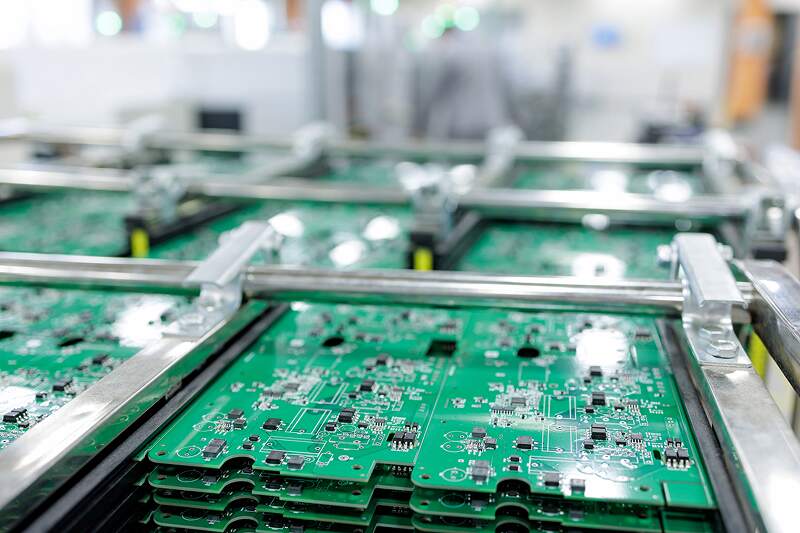
Next, an automated pick-and-place machine positions each component onto the wet paste. These machines work at high speed and place parts with great accuracy, far beyond what a person could do by hand. This is where automation earns its place, putting thousands of parts down quickly and in exactly the same way every time.
3. Reflow Soldering
The board then travels through a reflow oven, which heats it in stages. The temperature climbs to a peak of roughly 240-250°C, potentially 260°C to melt the solder, which bonds the components to the pads, before the board passes into a cooling zone so the joints set properly.
The melted solder forms both the electrical connection and the physical hold. The surface tension of the molten solder even helps pull slightly off-centre parts into place.
4. Inspection and Test
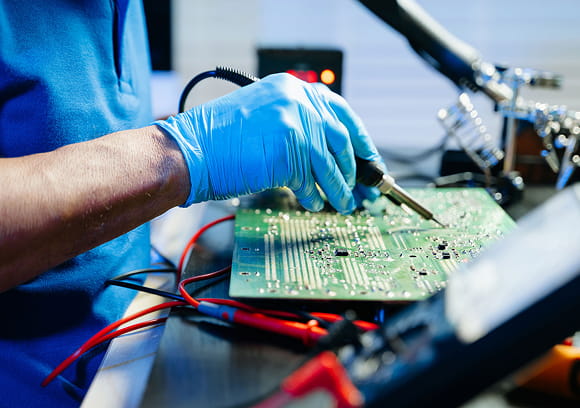
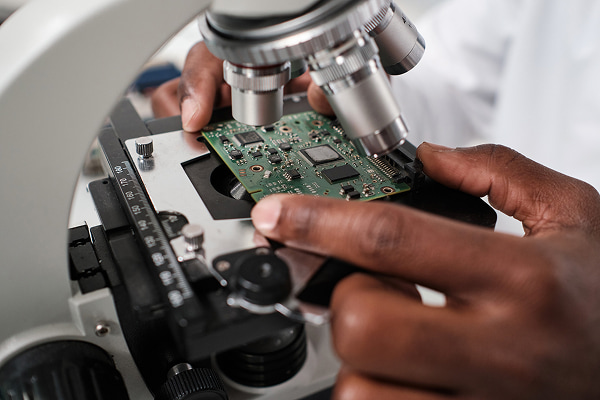
Finally, the board is checked. Automated Optical Inspection (AOI) examines the solder joints, component placement and polarity against the original design. Any through-hole or hand-soldered parts are added at this stage too, and the finished board is functionally tested to confirm it works as intended.
A useful way to picture surface mount technology is as a relay: paste, place, solder, inspect. A weak handover at any stage shows up later, often in the field.
What Separates a Strong SMT Line From an Average One
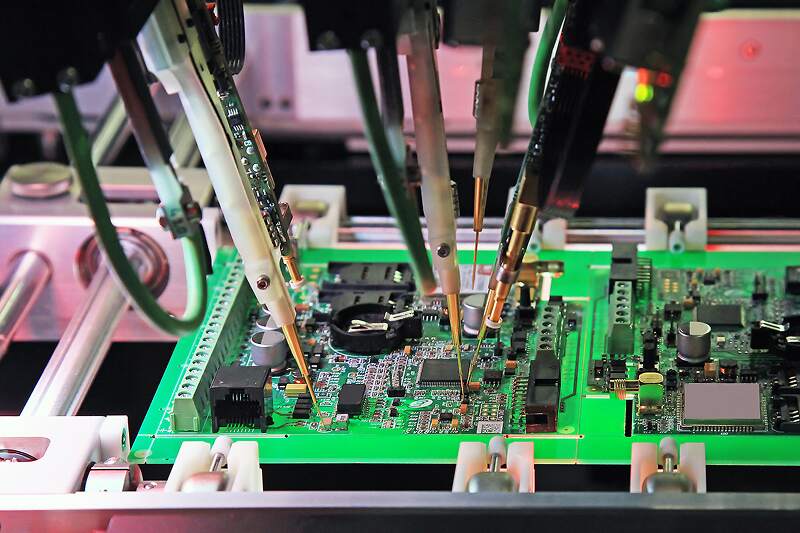 Once you understand the process, you can judge a manufacturer properly. The equipment matters, but it is not the whole story. Defects are usually a sign that the process has drifted out of control, not simply that a machine slipped. Good manufacturing is about controlling the whole process around the machines, not just owning advanced kit.
Here is what to look for when assessing surface mount technology capability:
- Automation that delivers the same result on every board
- Inspection on every board, not just a sample
- Strong process control at the paste stage, where most defects begin
- In-house engineering that spots design and component problems before production
- Full traceability and a warranty that reflects real confidence
That last point is worth dwelling on.
Inspection You Can Actually Trust
Saying “we inspect” means little if it only happens on a handful of boards. The stronger position is inspecting every board, every time.
DSL runs 3D AOI on every board it produces, checking joints, placement and polarity against your design data. That is the difference between catching a fault before despatch and discovering it once the product is in a customer’s hands.
The Warranty Question
Most contract manufacturers offer a 12-month warranty. A 5-year warranty is a different statement. It says the manufacturer trusts its own process enough to stand behind every board for years, not months.
That confidence has to be earned through the controls described above. When you see a long warranty, it usually points to a disciplined line behind it.
SMT in the Real World
SMT sits behind almost everything electronic, but the stakes change with the sector. In consumer gadgets, cost per unit often leads. In industrial, medical, defence and telecoms work, reliability and traceability matter far more, because a field failure is costly and sometimes dangerous.
This is where a steady manufacturing partner shows its worth. DSL has built complex assemblies for Brightwell Systems for more than 20 years, including through the global component shortage when supply was at its most difficult. Long relationships like that are a fair signal of consistent, reliable manufacture.
If you want to understand the design side of reliability, our guide to common PCB design issues covers the problems that surface most often before a board ever reaches production.
Putting Your New Knowledge to Work
SMT assembly is the method behind the vast majority of modern electronics, and now you know why. Components mounted straight onto the board surface, placed and soldered by automated lines, in a process that runs from paste to placement to reflow to inspection.
The bigger lesson is this. The technology is only as good as the process discipline behind it. You can now judge a manufacturer on the things that actually drive quality: whether every board is inspected, how tightly the paste stage is controlled, whether real engineering support sits behind the line, and what the warranty quietly tells you about their confidence.
If you would like a second set of expert eyes on your design before it goes into production, a free Design Health Check is a straightforward next step. It is a low-risk way to catch issues early, while they are still cheap to fix.