(And How to Plan for It)
This article breaks down the cost structure of Prototyping and Pre-production runs, explains what is standard practice across the contract electronics manufacturing industry, and where a manufacturer’s approach can make a meaningful difference to what you actually pay.
The Prototype Price Is Not Your Production Price
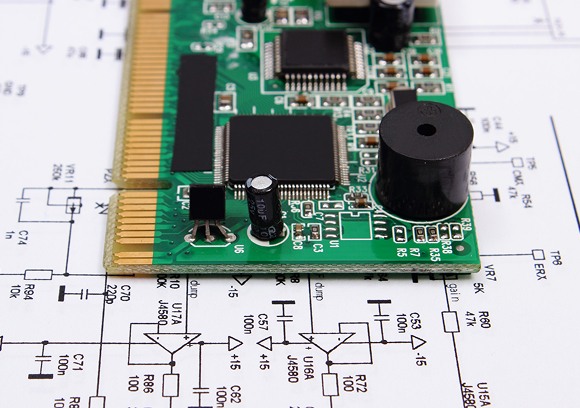
Prototypes are produced at low volumes, often with manual processes, minimal documentation, and no formal production infrastructure. The unit cost is high because nothing is optimised for repeatability. There is no panelised assembly, no machine-programmed placement, no controlled process documentation.
Production PCB assembly amortises all of that investment across volume. By the time a product reaches a mature production run, the unit cost is typically substantially lower than prototype cost, not higher. The first production run sits between those two points: the process infrastructure is being built, and some of that cost lands on run one.
Understanding which costs are genuinely one-time, which are recurring, and which some manufacturers absorb rather than pass on, is the most useful thing a product developer or procurement professional can know before requesting a quote.
NRE Charges
NRE stands for Non-Recurring Engineering. In standard industry practice, it is the set of charges applied to cover setup work carried out once to establish production capability: stencil manufacture, machine programming, process documentation, and related engineering time.
The logic is straightforward. This work is real, takes time, and has to be done before production can begin. Most contract electronics manufacturers pass these costs directly to the client on the first order.
DSL takes a different position. Setup costs are treated as DSL’s investment in being able to build your product, not as a billable line item. The free NRE offer is a formal part of DSL’s offer, not a case-by-case concession. The engineering work still happens and the quality is not compromised, but the client does not see it as a charge on their first-run invoice.
This is not standard across the industry. When comparing quotes, it is worth confirming whether NRE is itemised separately or absorbed, as it can represent a meaningful difference in first-run cost for more complex assemblies.
Tooling, Panelisation, and PCB-Specific Costs
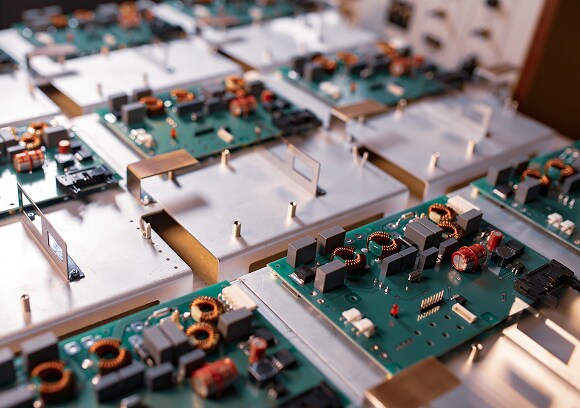
PCBs are assembled in panels: arrays of individual boards run through the production process together. Panel design, V-scoring or tab routing decisions, and conveyor rail planning all require engineering work on the first run. Once established, this work does not need repeating.
If your design includes through-hole components processed through wave soldering, a custom pallet may be required to protect surface mount components during the wave process. This is a physical tooling item with an associated one-time cost.
These are costs that exist across the industry. The key for any product developer is to understand that they are front-loaded: they inflate the last prototype run and do not appear on subsequent orders. DSL doesn’t charge these at all.
Non-functional prototypes
Prototype runs on a new design naturally carry a higher risk of being non-functional than mature production.
DSL’s approach is to reduce that first-run fallout rate rather than simply catch it after the fact. The complimentary Design Health Check applies a full day of in-house engineering effort to review your PCB design before prototypes are built. It checks for functional issues, footprint errors, and problems that would otherwise surface in production.
The service has identified issues that would have prevented a working assembly or caused significant delay. Catching those issues before the first run is built is substantially cheaper than resolving them after, which usually will necessitate a repeat run
Component MOQs and Excess Stock
Distributor minimum order quantities don’t always align neatly with prototyping or pre-production volumes. A component specified with a 500-unit MOQ on a 100-unit first run means someone buying 400 units of stock you do not immediately need. That excess inventory cost can land on the first run.
For products entering regulated sectors, component qualification adds further overhead. Approving vendor lists, qualifying alternate sources, and validating component performance against specification are concentrated in the early production phase and do not fully recur on mature repeat orders.
Good supply chain management and early BOM rationalisation reduce exposure here, but MOQ realities cannot be engineered away entirely. Factoring excess stock cost into the first-run budget is more useful than being surprised by it.
DSL’s flexible delivery schedule offering is relevant here. Where clients prefer not to hold excess stock, flexible delivery schedules allow production to be planned across multiple tranches, spreading both the inventory burden and the cash flow requirement over time. Where DSL know production will be long term, they are also often happy to front the cost of excess components.
How to Reduce Early Runs Cost Without Cutting Corners
Prototyping and pre-production will always cost more per unit than mature production. That is structural. But the size of the premium is not fixed, and preparation has a direct effect on it.
Invest in a design review before committing to production. Identifying and resolving design issues before tooling is made is always cheaper than resolving them after. DSL’s Design Health Check is complimentary and covers a full day of engineering review.
Provide complete documentation upfront. A verified BOM, clear assembly drawings, and confirmed component sources reduce engineering overhead and the risk of costly errors.
Understand what your manufacturer absorbs versus what they pass on. NRE treatment varies significantly across the industry. It is worth asking directly rather than discovering the difference in the quote. At DSL, NRE is not charged.
Plan for a first-run premium. For low-to-mid volume electronics, budgeting for a first-run unit cost of 1.5 to 2 times the anticipated mature production unit cost is a reasonable baseline.
Work with a manufacturer who connects design to production. A contract manufacturer with in-house or closely connected electronic design capability can catch manufacturability issues during design, where fixing them costs a fraction of what they cost in production.
What Happens to Cost at Higher Volumes?
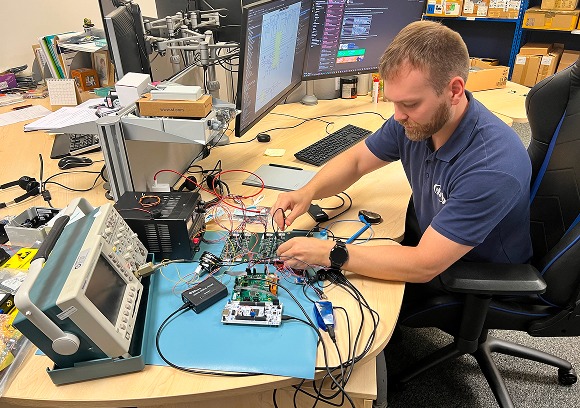
For a decent volume production run, the picture is substantially different.
Build your product cost model around mature production unit costs, not early-run data. Treat the early-run premiums as what they are: a one-time capital investment in the ability to manufacture your product successfully, repeatedly and at scale – without risking 1,000 or 10,000 non-functional units!
DSL’s 5-year warranty on every assembly it produces is a direct expression of confidence in that production process. An industry-standard warranty runs to 12 months. The willingness to back production quality for five years reflects what a thoroughly established, well-documented production process delivers from run one onwards.
Planning Your Prototyping or Pre-production Runs
Understanding cost structure removes the sticker shock. It also makes it possible to have a more productive conversation with your manufacturer before the quote arrives, rather than after.
Know what NRE is and whether your supplier charges it. Understand which tooling costs are one-time. Provide good documentation. Invest in a pre-production design review. Ask questions directly.
DSL Electronic Manufacture works with product developers and engineers across the full transition from prototype to production. If you are approaching a first production run and want to understand what to expect and how to plan for it, contact the team for a straightforward conversation.
FAQ
Why does my unit price drop so much for volume orders?
Higher volumes spread machine loading costs across more units and have lower BOM component costs, including the bare PCB.
Do I pay NRE charges on every production run?
At most contract electronics manufacturers, NRE is a first-run charge for a given design. It does not recur on repeat orders so long as they are 100% identical thus require new setup work. At DSL, NRE is not charged to the client at all: it is treated as DSL’s investment in being able to build your product.
Can I reduce my first-run costs by providing better documentation?
Yes. A complete, verified BOM with confirmed component sources, accurate assembly drawings, and clear revision history reduces the engineering time required for production setup. It also reduces the risk of errors that generate costly rework – finally it allows an RFQ to become a quotation much faster. Good documentation is one of the most practical things a client can provide.
What is a Design Health Check and how does it affect first-run cost?
DSL’s Design Health Check is a complimentary pre-production service that applies a full day of in-house engineering review to your PCB design. It identifies functional issues, footprint errors, and manufacturability problems before prototypes are built. Catching these issues at design stage is substantially cheaper than resolving them once production has started.
What should I budget for a first production run?
As a planning baseline, budgeting for a first-run unit cost of 1.5 to 2 times your anticipated mature production unit cost is reasonable for low-to-mid volume electronics. The actual figure depends on design complexity, documentation quality, component availability, and your manufacturer’s approach to setup costs. Asking your manufacturer to itemise one-time versus recurring costs in the quote gives you the clearest picture.